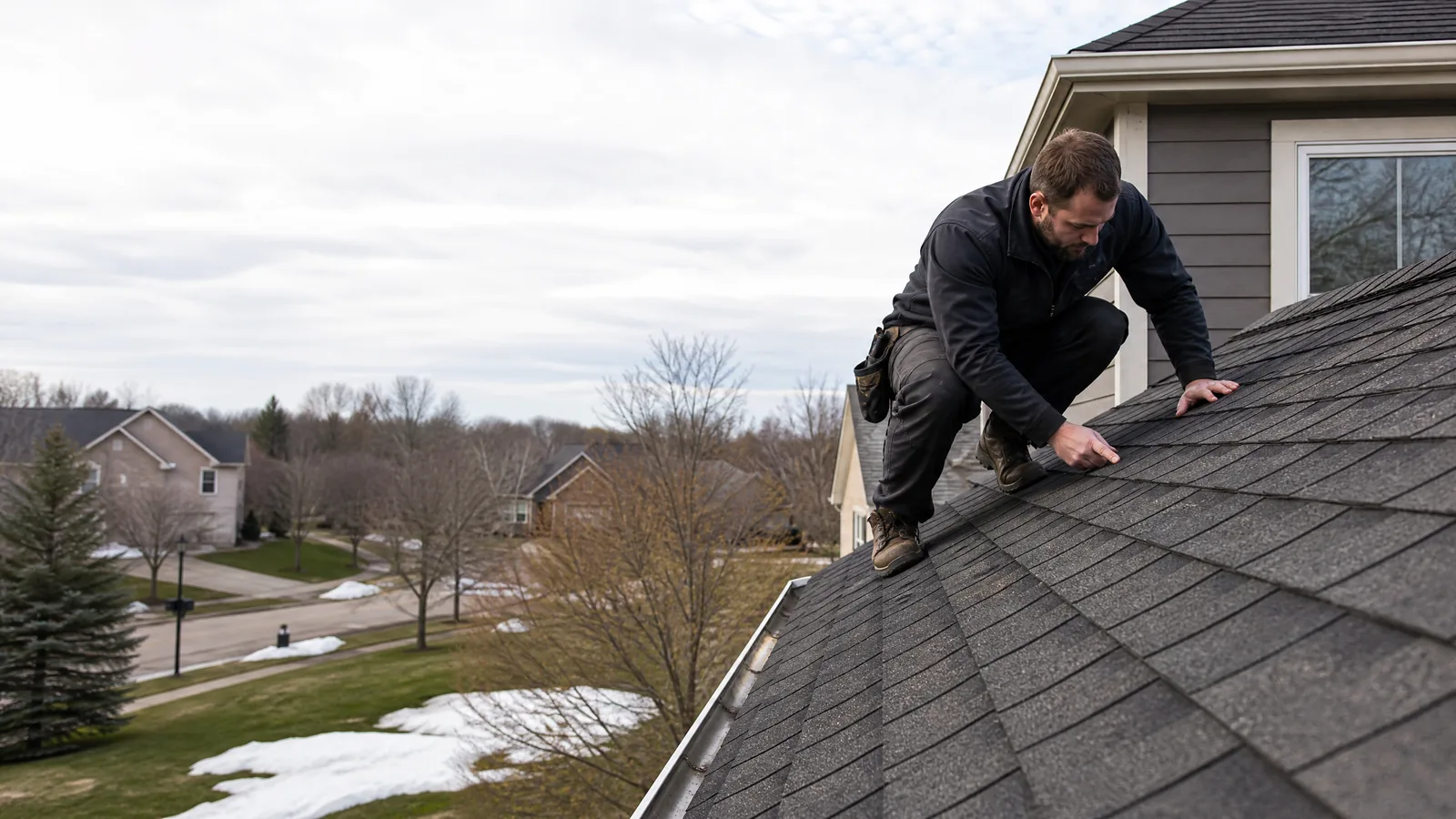
A Minnesota winter can be hard on a roof. Snow, freeze-thaw cycles, wind, and ice can expose small problems that were easy to miss in the fall. A calm, ground-level review in spring is a useful first step before a minor concern becomes a larger repair.
Start with a safe ground-level walkaround
Look for shingles that appear lifted, cracked, missing, or visibly out of line. Check flashing areas around chimneys, vents, and walls for anything that looks loose. Binoculars can help you see more without climbing onto the roof. If a closer inspection is needed, call a qualified professional rather than walking a roof yourself.
Check gutters, downspouts, and the areas below them
Granules in a gutter, recurring overflow, loose sections, or water staining near the eaves can all be worth noting. Gutters do not tell the whole story, but they can help point to drainage or roof-edge issues that deserve a closer look.
Pay attention inside the home, too
Attic moisture, ceiling staining, damp insulation, or musty odors are reasons to take action. These signs can have several causes, so a professional assessment can help distinguish ventilation, condensation, and roof-related concerns.
Quick planning checklist
- Look from the ground for obvious missing, lifted, or damaged shingles.
- Clear leaves and loose debris from gutters when it is safe to do so.
- Check attic and upper-floor ceilings for new staining or moisture.
- Write down concerns and take photos from a safe location before requesting an inspection.