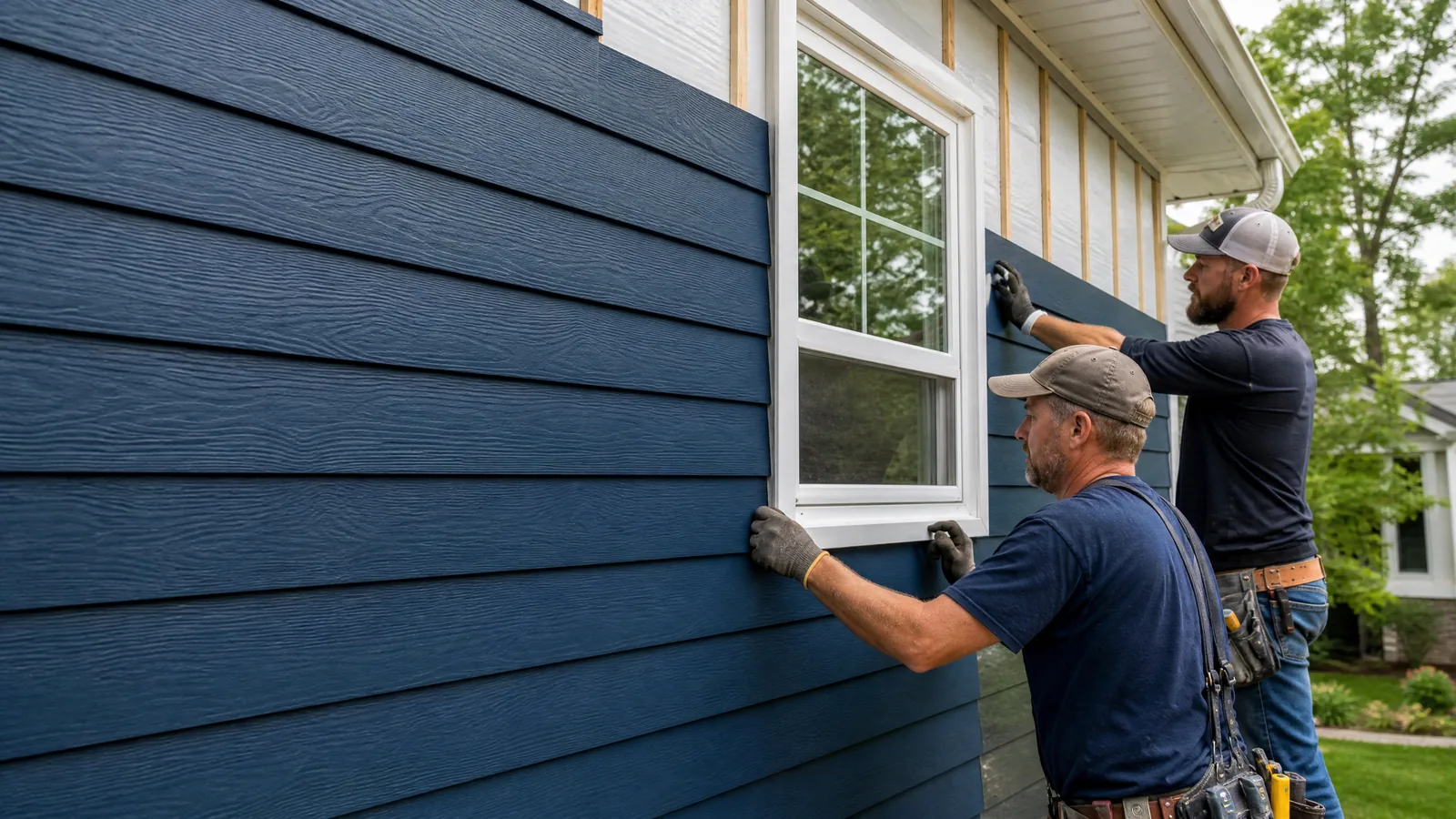
Siding does more than change curb appeal. It is part of your home’s weather barrier, and Minnesota’s temperature swings can make condition and installation details especially important. Knowing what to watch for can make it easier to plan a siding project on your terms.
Watch for damage that keeps returning
Cracks, loose pieces, soft spots, warping, peeling finishes, or repeated caulking failures can signal that an area needs closer attention. One isolated issue may have a straightforward repair, while broad or recurring problems can make replacement the more practical conversation.
Look closely around windows, doors, and transitions
Openings and trim details are where water-management decisions matter. Look for gaps, staining, soft wood, or trim that no longer sits flat. A replacement scope should account for these details rather than treating siding as a surface-only upgrade.
Choose material based on the whole project
Vinyl, engineered wood products, and fiber-cement options each bring different appearance, maintenance, and budget considerations. The best fit depends on the home’s style, existing details, and the finish you want—not only on the name of a material.
Quick planning checklist
- Photograph any cracks, gaps, soft areas, or loose panels.
- Note whether the issue is isolated or visible across several elevations.
- Consider trim, fascia, soffit, and gutters as part of the exterior plan.
- Ask how transitions and water-shedding details will be handled.